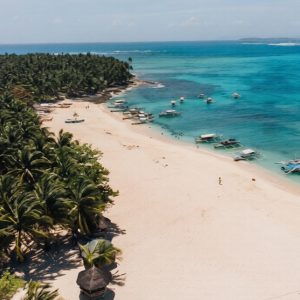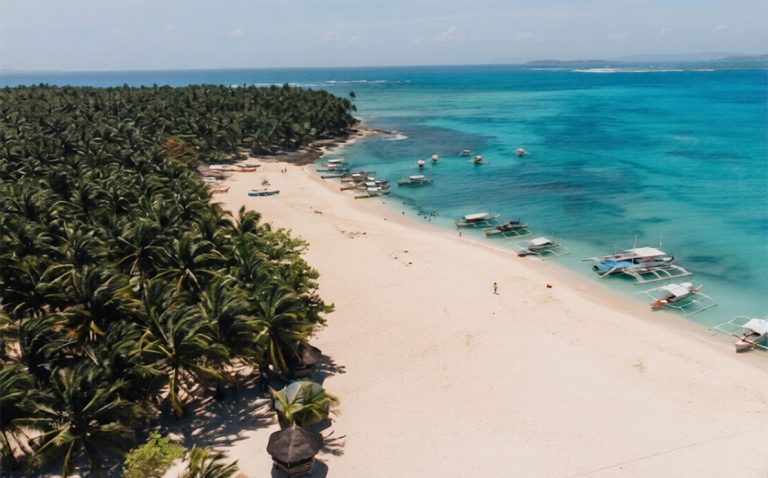

Siargao has always been more than surfing waves and powdery white beaches. Hidden among its lush greens and coastal roads lies a landmark that captures island life’s simple magic — the Afam Bridge. What began as a practical infrastructure project has become one of the most iconic social spaces on the island: a place where sunsets, stories, and connections meet.
From Road to Rendezvous: How Afam Bridge Came to Be
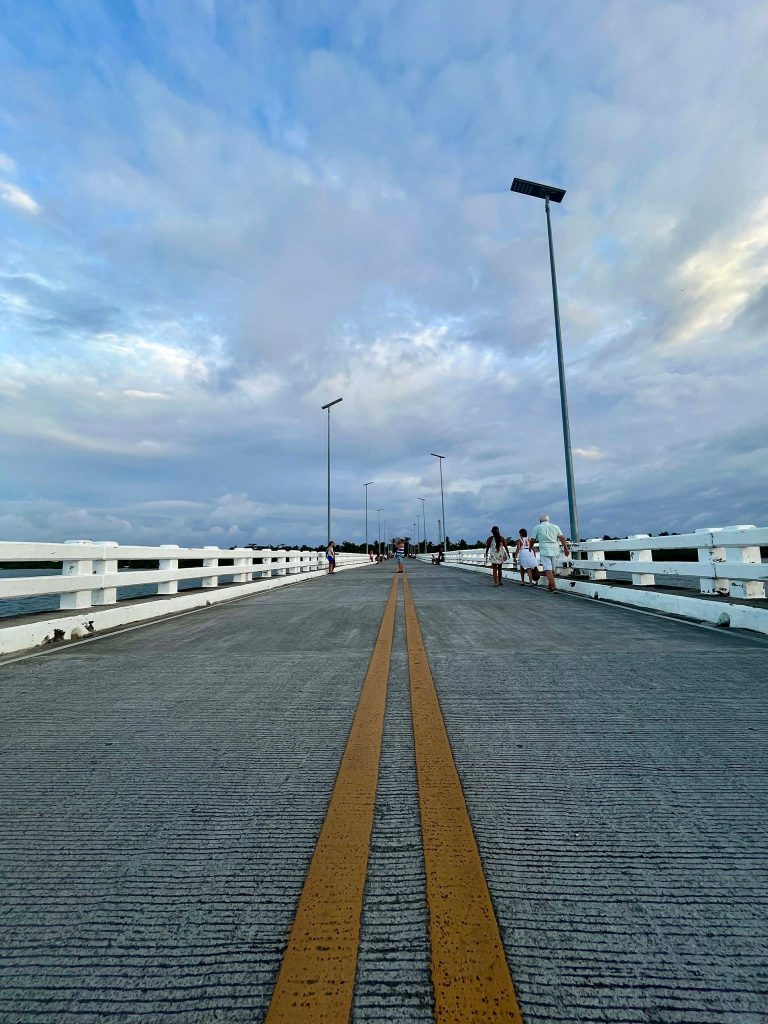
Officially known as the Catangnan-Cabitoonan Bridge, Afam Bridge connects the energetic streets of General Luna to the peaceful barangay of Cabitoonan in Pilar. The structure spans roughly 348–349 meters of concrete and steel — making it one of the longest and most visible bridges on the island.
Construction began around 2016 and was completed in 2021, with the goal of improving mobility and making inter‑barangay travel faster and safer.
But as soon as wheels — and feet — began using its span, Afam Bridge began evolving from a simple road link to a social junction, where locals and travelers alike gather to soak in one of Siargao’s most beloved daily rituals: the sunset.
From Acronym to Icon: Why “Afam Bridge”
The name “Afam Bridge” might sound unusual — and its origin reflects the island’s evolving social fabric. “AFAM” started as a playful term among locals: an acronym for “A Foreigner Assigned in Manila,” referring to the many outsiders who would pass through Siargao or linger near General Luna.
Because many of these foreigners — often travelers, surfers, or long‑stay visitors — would make their way to the bridge to hang out, watch the sea and sky, or meet friends, the bridge slowly became colloquially known as “Afam Bridge.” The nickname stuck. Today, most people — locals and tourists alike — refer to it by that name.
In a way, the name captures the spirit of Afam Bridge: a place where worlds collide — local and foreign, simple island life and global wanderlust — under a shared sky.
When the Sun Goes Down: The Bridge Comes Alive
Afam Bridge is at its best during the golden hour. As late afternoon approaches, the bridge begins to stir. People — locals heading home, travelers returning from the beach, or friends meeting after a day of adventure — begin trickling in. Many gather on the bridge to watch the sun dip toward the horizon.
Vendors line the sides of the bridge, selling all kinds of local treats: grilled seafood, fresh corn, sweets — island flavors that perfectly complement the salty breeze and shimmering waters below.
By evening, soft solar-powered lamps light up the walkway, casting a warm glow that invites couples strolling hand‑in‑hand, friends taking photos, or solo travelers sitting quietly, soaking in the view. The atmosphere becomes simultaneously lively and peaceful — a blend of motion and stillness that feels uniquely Siargao.
For many, Afam Bridge isn’t just a crossing anymore — it’s a destination.
More Than a Bridge — A Social Landmark
Afam Bridge’s transformation illustrates how infrastructure can reshape community life. On the surface, it serves the practical role of linking communities and easing travel between General Luna and Pilar. But over time, it has grown into a cultural and social landmark — a public space where locals and visitors share stories, laughter, and sunsets.
For some, the bridge has become a backdrop to personal stories: friendships forged with travelers, romantic evenings by the water, or quiet moments of contemplation under the stars. According to local media, the bridge has even witnessed blossoming relationships between Filipinos and foreign visitors, lending it a romantic aura as a “tulay ng pag‑ibig” (“bridge of love”).
In short — Afam Bridge has become a living part of Siargao’s identity: a place that symbolizes connection, openness, and the blending of cultures under the island’s sky.
Visiting Afam Bridge — What You Should Know
If you’re planning a trip and want to experience Afam Bridge for yourself, here are a few tips to get the most out of it:
- When to go: Late afternoon (around 4:00–5:00 PM) is ideal. That’s when the bridge begins to buzz with energy: strolling locals, arriving visitors, food stalls opening, and the sunset unfolding.
- How to get there: From General Luna, motorbike or tricycle is the easiest — the ride usually takes about 20–30 minutes.
- What to bring: A camera for sunset shots, lightweight clothes (because it can get breezy by the water), and some cash — many of the vendors are small, local sellers.
- Evening vibe: As the sun sets and lights come on, the mood shifts. It’s a laid-back mix of laughter, chatter, soft music, and reflection. Great for couples, friends, or solo travelers wanting a relaxed slice of Siargao life.
Why Afam Bridge Deserves a Spot on Your Siargao Itinerary
If you visit Siargao but skip Afam Bridge, you miss out on more than just a pretty sunset. You miss a slice of what makes the island more than a surf or beach destination.
Afam Bridge shows Siargao’s human side — its communities, the blending of locals and travelers, the spontaneity of evening markets, and the moments of calm beneath radiant skies. It offers a different kind of island charm: less about postcards, more about real-life rhythms.
For travelers seeking authenticity — a place where locals and foreigners mingle, share food, stories, laughter, and sunsets — Afam Bridge is essential. It reminds us that travel isn’t just about destinations; it’s about connecting, sharing, and witnessing life as it unfolds naturally.
Stay Nearby — Make the Most of Your Visit
Because the bridge is close enough to General Luna and other popular areas, staying in nearby hotels or guesthouses gives you the flexibility to drop by at sunset, linger under the lights, and soak in the vibe without rushing back. On SiargaoHotels.ph, we list accommodations that balance comfort, accessibility, and proximity to key spots — including Afam Bridge.
That way, after a day of island hopping, surfing, or exploring lagoons, you can end your day with a stroll across the bridge, some grilled seafood, and a peaceful sunset view before heading back to your room.
Final Thoughts
Afam Bridge — once a functional road link — has grown into something far richer: a cultural landmark, a social gathering spot, a place where locals and travelers meet, unwind, and connect. It stands as a testament to how simple infrastructure can evolve into meaningful public space.
So next time you plan your Siargao trip, don’t just chase waves or beaches. Cross Afam Bridge. Stay a while. Watch the sky turn gold. Enjoy grilled seafood from a roadside stall. Share a smile with a stranger. Let the bridge show you a side of Siargao that’s peaceful, real, and quietly beautiful.